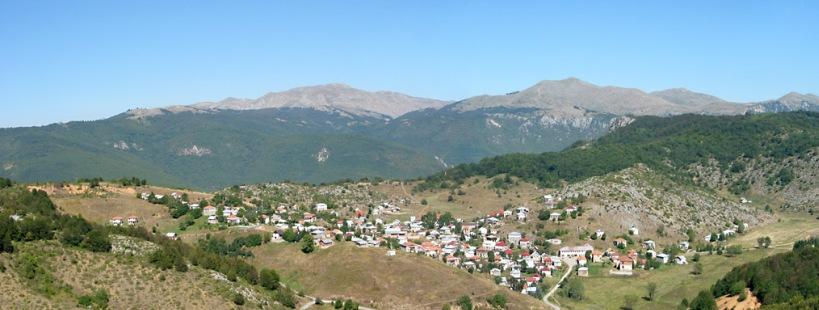
One of our biggest God given rights is to declare our selves for who we are.
Unfortunately, some of us don't have that right.
Check out the video, and you will find out, what are Macedonians going through their history, and what is their presence like.
One name, one love, one Macedonia.
Everything about Republic of Macedonia on one place. Blog for promotion of the Macedonian culture and tourism.
Showing posts with label macedonians. Show all posts
Tuesday, June 29, 2010
I am Macedonian
Labels:
careca,
culture,
history,
I am Macedonian,
Macedonia,
Macedonian,
macedonians,
tradition
Wednesday, June 23, 2010
"Macedonia for Macedonians" rally 1922 in the USA
This video is from a rally in United States, organized by the Macedonian commune.
Even though some people say that Macedonians are new, artificial nation, without past, a nation created after World War II, this shows the movement of the Macedonians in 1922.
Macedonian community in the United States of America got organized in 1922 in Fort Wayne, Indiana. Since then, this organization (MPO) and all the other organization of the Macedonians, in some period were usurped by people who were spreading mainly Bulgarian, and sometimes Greek propaganda.
Through the years, most of the neighboring Balkan countries, tried to usurp Macedonian history and identity, and by doing that to cover up the segregation of the Macedonians after the Balkan Wars in 1912 - 1913. Let us not forget the genocide over the Macedonian population in Kingdom of Yugoslavia, Bulgaria and Greece in the twenties and the thirties, especially in Greece during and after the Greek civil war 1946 - 1449 .
Macedonians strongly set themselves on the idea of having their own country. Since 8th of September 1991, that idea became reality. Republic of Macedonia is a motherland for all the Macedonians around the world and strength that holds them together.
MACEDONIA FOR MACEDONIAN. UNITED MACEDONIA!
Even though some people say that Macedonians are new, artificial nation, without past, a nation created after World War II, this shows the movement of the Macedonians in 1922.
Macedonian community in the United States of America got organized in 1922 in Fort Wayne, Indiana. Since then, this organization (MPO) and all the other organization of the Macedonians, in some period were usurped by people who were spreading mainly Bulgarian, and sometimes Greek propaganda.
Through the years, most of the neighboring Balkan countries, tried to usurp Macedonian history and identity, and by doing that to cover up the segregation of the Macedonians after the Balkan Wars in 1912 - 1913. Let us not forget the genocide over the Macedonian population in Kingdom of Yugoslavia, Bulgaria and Greece in the twenties and the thirties, especially in Greece during and after the Greek civil war 1946 - 1449 .
Macedonians strongly set themselves on the idea of having their own country. Since 8th of September 1991, that idea became reality. Republic of Macedonia is a motherland for all the Macedonians around the world and strength that holds them together.
MACEDONIA FOR MACEDONIAN. UNITED MACEDONIA!
Sunday, March 14, 2010
Council of Europe: Committee on Legal Affairs and Human Rights slaps Greece on minority issue
Check out the official document on Greece:
Case study: Greece
77. Since the monitoring procedures set up under the framework convention and the European charter do not formally apply to states that have not ratified them, these states escape scrutiny by the advisory committee (but they are monitored by other Council of Europe bodies). It is nevertheless most interesting to examine how these countries accommodate diversity, whether through minority policies with respect to recognised minorities or through a "non-discrimination" approach when minorities are not recognised, or by combining both approaches. In the context of this report, I therefore decided to visit one of these countries, namely Greece, which recognises only one minority on its territory. From 26 to 28 February 2009, I had a number of meetings in Athens, Thessaloniki and Florina (see the programme of the visit in Appendix III).
78. In its 2004 report on Greece, the ECRI noted, “persons wishing to express their Macedonian, Turkish or other identity incur the hostility of the population. They are targets of prejudices and stereotypes, and sometimes face discrimination, especially in the labour market”.24 In its 2009 report on Greece,25 the ECRI expressed concern about the situation of Roma, which suffer discrimination in particular in education, housing and employment.26 It also noted that the problem of the recognition of the identity of Macedonians and ethnic Turks, and in particular their right to freedom of association, remains. 27
79. Given that other reports of the Parliamentary Assembly’s Committee on Legal Affairs and Human Rights address the issue of the Muslim minority in Thrace (Eastern Greece), as well as the situation of Roma in Europe,28 I limited my focus to the contentious issue of the Macedonian community in Greece, which has, inter alia, also been recently dealt with, to various extents, by the Council of Europe’s Human Rights Commissioner and the United Nations independent expert on minority issues, Ms Gay McDougall. The latter also visited Florina in September 2008. 29
- The approach of the Greek Government
80. The Greek authorities recognise only one minority in Greece, namely the ‘Muslim’ minority in Western Thrace, by virtue of the Lausanne Peace Treaty of 24 July 1923. In this context, Greece was recently commended by various bodies, including the Parliamentary Assembly’s Committee on Legal Affairs and Human Rights,30 for a number of measures it had taken to enhance the rights of the Muslim minority in Greece. As regards others, Greece favours the approach to non-discrimination defined by European Union instruments.31
81. The Greek authorities have repeatedly denied the existence of any Macedonian minority in Greece and repeatedly referred to the hijacking of local culture by persons and groups which pursue political aims.
82. Despite the non-recognition of any other national or linguistic minority, the Greek authorities have acknowledged that in northern Greece there exist “a small number of persons who … use, without restrictions, in addition to the Greek language, Slavic oral idioms, confined to family or colloquial use”.32
83. During my visit, the Greek authorities stressed that Greek citizens who claim Macedonian identity are fully represented by a political party, which is free to participate in elections in Greece.
- Claims of representatives of the Macedonian community
84. First and foremost, I should stress that there has not been any ethnic violence in the Florina area. Greek society is pluralistic and open to diversity. Nevertheless, it seems that still today, persons who express and actively claim a Macedonian identity often come up against the resentment and even hostility of the authorities.
85. Members of the Macedonian community recognised that their situation had improved in the last 15 years, though they were still allegedly subject to individual acts of harassment and intimidation (at work, to get Greek citizenship, when crossing the border with the neighbouring country, for recognition of diplomas, for property issues or in religious matters). They ask the authorities to recognise their right to self-identification as well as the existence of a Macedonian national minority in Greece.
77. Since the monitoring procedures set up under the framework convention and the European charter do not formally apply to states that have not ratified them, these states escape scrutiny by the advisory committee (but they are monitored by other Council of Europe bodies). It is nevertheless most interesting to examine how these countries accommodate diversity, whether through minority policies with respect to recognised minorities or through a "non-discrimination" approach when minorities are not recognised, or by combining both approaches. In the context of this report, I therefore decided to visit one of these countries, namely Greece, which recognises only one minority on its territory. From 26 to 28 February 2009, I had a number of meetings in Athens, Thessaloniki and Florina (see the programme of the visit in Appendix III).
78. In its 2004 report on Greece, the ECRI noted, “persons wishing to express their Macedonian, Turkish or other identity incur the hostility of the population. They are targets of prejudices and stereotypes, and sometimes face discrimination, especially in the labour market”.24 In its 2009 report on Greece,25 the ECRI expressed concern about the situation of Roma, which suffer discrimination in particular in education, housing and employment.26 It also noted that the problem of the recognition of the identity of Macedonians and ethnic Turks, and in particular their right to freedom of association, remains. 27
79. Given that other reports of the Parliamentary Assembly’s Committee on Legal Affairs and Human Rights address the issue of the Muslim minority in Thrace (Eastern Greece), as well as the situation of Roma in Europe,28 I limited my focus to the contentious issue of the Macedonian community in Greece, which has, inter alia, also been recently dealt with, to various extents, by the Council of Europe’s Human Rights Commissioner and the United Nations independent expert on minority issues, Ms Gay McDougall. The latter also visited Florina in September 2008. 29
- The approach of the Greek Government
80. The Greek authorities recognise only one minority in Greece, namely the ‘Muslim’ minority in Western Thrace, by virtue of the Lausanne Peace Treaty of 24 July 1923. In this context, Greece was recently commended by various bodies, including the Parliamentary Assembly’s Committee on Legal Affairs and Human Rights,30 for a number of measures it had taken to enhance the rights of the Muslim minority in Greece. As regards others, Greece favours the approach to non-discrimination defined by European Union instruments.31
81. The Greek authorities have repeatedly denied the existence of any Macedonian minority in Greece and repeatedly referred to the hijacking of local culture by persons and groups which pursue political aims.
82. Despite the non-recognition of any other national or linguistic minority, the Greek authorities have acknowledged that in northern Greece there exist “a small number of persons who … use, without restrictions, in addition to the Greek language, Slavic oral idioms, confined to family or colloquial use”.32
83. During my visit, the Greek authorities stressed that Greek citizens who claim Macedonian identity are fully represented by a political party, which is free to participate in elections in Greece.
- Claims of representatives of the Macedonian community
84. First and foremost, I should stress that there has not been any ethnic violence in the Florina area. Greek society is pluralistic and open to diversity. Nevertheless, it seems that still today, persons who express and actively claim a Macedonian identity often come up against the resentment and even hostility of the authorities.
85. Members of the Macedonian community recognised that their situation had improved in the last 15 years, though they were still allegedly subject to individual acts of harassment and intimidation (at work, to get Greek citizenship, when crossing the border with the neighbouring country, for recognition of diplomas, for property issues or in religious matters). They ask the authorities to recognise their right to self-identification as well as the existence of a Macedonian national minority in Greece.
Monday, July 20, 2009
Teškoto - Lazaropole, Western Macedonia (1948)
This is a video from the archives of the Macedonian National Television (MVT) taped in 1948 in the mountain village of Lazaropole, in the western part of Republic of Macedonia.
Teskoto (Тешкото, Macedonian for "The Hard One"), is a Macedonian folk dance. Origins of this folk dance are from the western part of Republic of Macedonia and are related to whole Miak region.
This traditional folk dance is the image of the hard life that Macedonian people lived starting from the second half of the 19th century. It is traditionally performed by the close family of a person who goes abroad to earn money for his family. This folk dance has inspired many artists and poets (for example Blaze Konevski and his poem "Teskoto" - "The Hard One").
Now, something about the village of Lazaropole. Lazaropole (Macedonian Cyrillic: Лазарополе) is a settlement in the Republic of Macedonia. Situated on a plateau at Mount Bistra and surrounded by beech and oak forest; at 1,350 m altitude, it is one of the highest settlements in the country.
The village is named after a medieval local hero, Lazar, who according to a legend was the sole survivor of a Turkish attack on his village, the rest of the townspeople were killed in the cave where they had sought refuge, Lazar, the only survivor, crawled outside and built a new town.
There are about 400 houses in the village. The older ones reveal the traces of the Mijaci highland building style. The village was the birthplace of numerous authors, educators, carvers, teachers, fresco and icon painters, and constructors. Especially picturesque are the village church of St. Gjorgi, built in 1838, and the small churches in the forests near the village.
The epic folk dance Teškoto ("The hard one/dance"), is from the area of Lazaropole.
Labels:
Bistra,
careca,
ethnology,
folklore,
Lazaropole,
Macedonia,
macedonian oro,
macedonians,
oro,
Republic of Macedonia,
Teškoto,
tradition
Thursday, July 16, 2009
Macedonia gets visa liberalization!
Macedonia finally gets a visa liberalization! Macedonians can travel without visas in the EU countries and the countries of the Schengen Agreement, after 1st of January 2010.

Twenty-nine countries, including 25 European Union states and non-EU members Iceland, Norway, Lichtenstein and Switzerland are bound to the full set of rules in the Schengen Agreement. "The Commission's proposal needs to be approved by the [European] Council after having consulted the European Parliament," the statement added.
Macedonia has met all necessary conditions for visa liberalization, but for Serbia and Montenegro, the entry into force of the visa waiver will depend on fulfillment of all remaining open benchmarks of their respective roadmaps by the date of adoption of this proposal by the Council, the statement said.
This proposal for granting visas was made for Serbia and Montenegro, as well.
Twenty-nine countries, including 25 European Union states and non-EU members Iceland, Norway, Lichtenstein and Switzerland are bound to the full set of rules in the Schengen Agreement. "The Commission's proposal needs to be approved by the [European] Council after having consulted the European Parliament," the statement added.
Macedonia has met all necessary conditions for visa liberalization, but for Serbia and Montenegro, the entry into force of the visa waiver will depend on fulfillment of all remaining open benchmarks of their respective roadmaps by the date of adoption of this proposal by the Council, the statement said.
This proposal for granting visas was made for Serbia and Montenegro, as well.
Labels:
EU,
liberalization,
Macedonia,
macedonians,
Montenegro,
Republic of Macedonia,
Schengen,
Serbia,
visa
Subscribe to:
Posts (Atom)