Showing posts with label Bitola. Show all posts

Thursday, February 4, 2010

Republic of Macedonia (promo video)

This is a 15 minutes promotional video of Republic of Macedonia. On the video, u can see colorful sides, information and beautiful music showing Macedonian culture and nature. 

I sincerely hope that all of you, one day will have chance to visit Macedonia and see all of the beauties of nature and culture, which this small country offers. Visit Macedonia! Cradle of culture, land of nature. Macedonia timeless.

Saturday, January 30, 2010

Macedonia walks onward

A “Macedonia walk onward” is a video promoted by the Government of Republic of Macedonia, in anticipation of the visa liberalization that happened on December 19th 2009. Since then Macedonians can travel to the Schengen zone countries (EU, plus Switzerland, Iceland and Norway, minus UK and Republic of Ireland) with out visas.


This beautiful video was shot in Bitola, the second most important administrative centre in Macedonia, after the capital, Skopje. Enjoy this short video and come and visit. Macedonia welcomes you.


Sunday, October 25, 2009

IN MEMORIAM - Ajri (Hayri) Demirovski

Ajri Demirovski (Македонски: Ајри Демировски, Türkçe: Hayri Demirovski) (1927 - october 21, 2009), is the author of the song „Битола мој роден крај“ (Bitola, my native city).

He was born in Bitola, Republic of Macedonia (former Kingdom of Yugoslavia). After the WWII liberation, Ajri Demirovski was the first student from Bitola who was sent to the Graphical school in Zagreb to study the printing craft. But he never worked as a printer in Bitola. 


He was employed at Radio Bitola as a guard where he had an unusual opportunity regularly to listen to the most popular Bitola and Macedonian singers in flesh. It made him think about the creation of new Macedonian music.


Ajri Demirovski composed over fifty songs. His most popular ones are: „Мариче, бре лично девојче“ (Marice beautiful girl), „А море мајко близу Битола“ (Somewhere mother near Bitola), and many others, which are thought to be folk song, since they have generally been accepted and sang. And certainly the most famous among them all is „Битола мој роден крај“ (Bitola my native city), infused with a passionate love towards his native Bitola, and which represents a music symbol of Bitola, by which Bitola is recognized and distinguished abroad.


Bitola's citizens, pronounced this song to be the song of the 20th century and thus its author Ajri Demirovski to be a honourable citizen of Bitola. He recieved this award in may, 2007. Few days ago (on october 21, 2009) Ajri Demirovski passed away in Izmir (Turkey) where he lived for the last 50 years. Rest in peace, big man!


Notes: This version of "Bitola moj roden kraj" was performed by Petranka Kostadinova.


Sunday, September 27, 2009

FK Pelister

FK Pelister (Macedonian: ФК Пелистер) is a football club based in the city of Bitola, Republic of Macedonia. The team plays in the Macedonian First League.

The club was originally formed back in 1924 under the name Omladina, followed by Pelister and then SK Bitola. In 1945 the team was renamed back to Pelister and has used that name ever since. 

The team played in the lower divisions of the former Yugoslavia and were champions of Macedonia in 1960, 1961, 1975 and 1982 along with winning the old Macedonian Cup in 1990. They earned promotion to the Yugoslav Second League for the first in team history in 1974. Soon after they were relegated but made another comeback in 1982 with Mitko Butlevski as chairman and Ivan Čabrinović as manager.

Their greatest achievement up to date was winning the 2001 Macedonian Cup, after which they played in the UEFA Cup. Since the formation of the Macedonian First League, they played there every season up until 2003 when the team fell on hard times caused by financial problems. 

A few years later former players Mitko Stojkovski and Toni Micevski were able to save the club from collapse, after taking over the club they brought instant success with the team winning the Macedonian Second League title in 2005. The following year they made a successful comeback to the Macedonian First League and got to the Macedonian Cup semi-final.


Notable players to come from the Pelister youth system are: Gjorgji Hristov, Dragan Kanatlarovski, Toni Micevski, Nikolče Noveski, Toni Savevski and Mitko Stojkovski. Overall the club is best known for developing some of the best young talents in the country.

Pelister played 3 times in the National Cup Finals (1993, 1994, 2001) and won the Macedonian National Football Cup once in 2001.

Monday, August 31, 2009

Mariovo

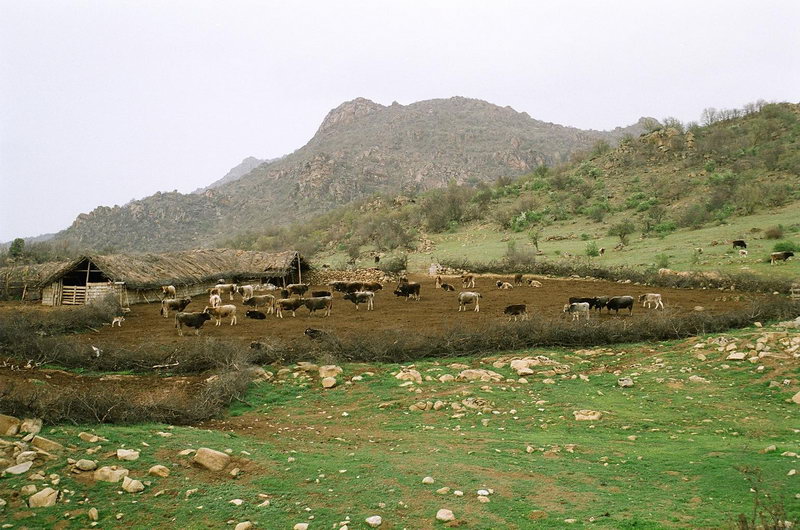
Mariovo (Macedonian Cyrillic: Мариово) is a mountainous region in southern Macedonia known for its traditional white costume. The area is somewhat large but since there has been no urban development in these spaces over the past century, the region contains no actual towns, only rustic villages. 

The largest village in Mariovo is Vitolište, situated in Prilep's municipality. Mariovo now is divided in three municipalities. Konopishte is in Kavadarci municipality, Vitolishte in Prilep municipality, and Staravina in Novaci municipality, as a part of Bitola's county.


It is said that Mariovo was named after the beautiful and brave girl Marija. The legend says that some turkish Pasha who has conquered the villages of Mariovo, has fallen in love with this girl and, enchanted by her beauty, was prepared to do everything to gain her love. 

But Marija's father was not approving on it, because his daughter was a Christian, and the Turk was a Muslim. The Pasha would not give up. Marija answered his persistence with one condition: she would become his wife, but the entire region, from the Poloski monastery, Selecka mountain, to the village by the name of Brod, then the Bitola region, the Nidze mountain and to the reach of Kozjak, to remain Christian and that not a single Turk should be inhabited there. The Pasha agreed to this condition, signed papers on that decision and took Marija with him.


He took her on the rood leading to the village of Dunje, Marija suddenly took the knife from her folds, and forcefully killed herself. Taking away her life, she did not surrender to the pasha, who later, although he wanted to, could not annul the contract he previously signed. 

By the power of this document, the guarantee that the entire region should remain Christian was respected. In the honor of the girl and her courageous act, the region was named Mariovo.


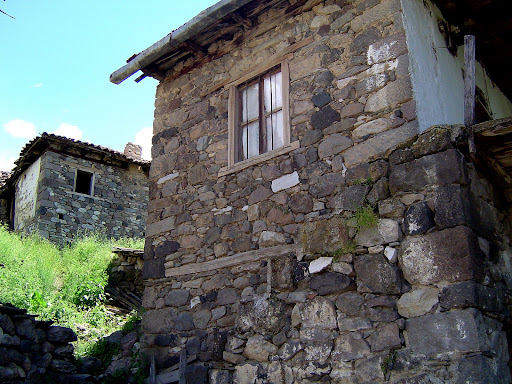
Mariovo is today almost completely deserted. Among the stones that make company to the large and fertile plains, among the many markings and directions that point the way to a temple of God or a shrine that once existed here, from time to time a fireplace can be observed, a house once in a while, the home to the most persistent who, besides everything, could not resist the extraordinary attractiveness of this picturesque region. 

And amid these fairly devastated houses from which the curious and a bit puzzled eyes of the shepherds greet you, in one of the old villages, Manastirec, a real surprise awaits you. Among the fragile buildings and unmentioned yards, almost in the center of the village, there is the opulent basilica, the monastery church St. Nikola, an elegant beauty that reminds of the past times of wealth and well-being.


Surrounded by the mountains of Selechka, Nidze, Kozjak, and Babuna, the region of Mariovo is one of the most interesting and most inaccessible areas in Macedonia. Its morphological features include barren and dry hills, deep stone river gorges, but also magnificent woodland areas in the higher regions of the mountains of Nidze, Kozjak, and Babuna.


In Vitolishta, Dunje, Staravina, and other villages, the ambience depicts the scenes and pictures of another, ancient time. Wild and cruel, yet quite picturesque, Mariovo land awakens interesting, pleasant, and mystic feelings in all who visit it.

Saturday, July 11, 2009

Tose Proeski - Jano mori

Todor "Toše" Proeski (Macedonian: Тодор „Тоше" Проески) (January 25, 1981 – October 16, 2007) was a famous Macedonian pop singer. 

He was popular across the entire Balkan area and further north, and locally he was considered a top act of the Macedonian music scene. Proeski was known for his trademark quote "Ve sakam site" (I Love You All), and called "Elvis Presley of the Balkans" by BBC News.He died in a car crash in Croatia on October 16, 2007.


During the early morning of October 16, 2007, at 6:20 a.m., Proeski died in a car accident on the Zagreb–Lipovac highway near Nova Gradiška, Croatia. He was a passenger along with his manager Ljiljana Petrović in a Volkswagen Touareg driven by Georgij Georgijevski. 

The Touareg crashed into the back of a truck and then into the median barrier, killing Proeski instantly, crushing the third vertebrae of the neck, although the truck sustained no damage. Proeski was asleep in the front passenger seat at the time of the crash. Of the other two passengers, only the driver suffered serious injuries (head trauma).


Proeski's body arrived at midnight in Skopje by helicopter of the Macedonian army, and was transported by car to his home town Kruševo. Grieving citizens gathered to pay their last respects at the airport and also in Macedonia Square. The Embassy of the United States of America, the USAID and the Diplomatic mission of the European Union published official statements on the death of Toše Proeski. 

October 17 was pronounced a national day of mourning in Macedonia. The three days following his death were pronounced days of mourning in the City of Kruševo.


After his death, the government of the Republic of Macedonia, gave him the title "Honorable citizen of Macedonia"


Albums

* Nekade Vo Nokta(Macedonian language) (1999)
* Sinot Božji (Macedonian language)(2000)
* Ako Me Pogledneš Vo Oči (Macedonian language version) /Ako Me Pogledaš U Oči (Serbian language version) (2002)
* Den Za Nas (Macedonian language version) /Dan Za Nas (Serbian language version) (2004)
* Po tebe (Macedonian language version)/Pratim Te (Serbian language version) (2005)
* Božilak (Traditional Macedonian folk songs) (2006)
* Igri bez granici (Macedonian language version) /Igra Bez Granica (Croatian language version) (2007)
* The Hardest Thing (2009) [post mortem] (English version)

Wednesday, July 8, 2009

Goce Nikolovski - Moja serenada

The most beautiful Macedonian serenades - Moja serenada, one of Goce Nikolovski's biggest hits.

Goce Nikolovski (macedonian: Гоце Николовски) was born 1947 -  died on 16 December 2006, was a famous Macedonian singer, known by his biggest hit "Biser Balkanski" .


Nikolovski popularity peaked in 1990, when his song "Biser Balkanski" won 1st prize at the Folk Fest Valandovo 1990 Song Festival, an annual competition in which singers from the former Yugoslavia.

The song became an instant hit and remained a classic in the Republic of Macedonia, even becoming somewhat of an anthem to a nation just starting off after its break up from Yugoslavia. Nikolovski was also given the nickname "Biser Balkanski" following the song.

Throughout the 1990's, Nikolovski went on to release several other hits, but none would measure up to the success that he found with "Biser Balkanski". In 1992, Nikolovski took part in the Canberra '92 Festival, a concert similar to the annual Valandovo song festival, with the song "Od Majka Nema Pomila".

Nikolovski's popularity declined as time progressed, and by the turn of the century, has virtually disappeared from the public eye.On december 16th 2006, he commited suicide in his house in Skopje.